Blog
ERP Software for Manufacturing in India
In India’s manufacturing landscape, the shift from manual coordination to systematic process governance does not happen because a factory “wants better software.” It happens because complexity outpaces informal control.
From small workshops to multi-location factories, manufacturing operations involve interdependent decisions: material planning, production scheduling, inventory control, quality assurance, compliance, warehousing, labour allocation, cost analysis, and shipping logistics. Each function must operate in sequence, but also in synchronicity.
Without a central system that enforces consistency, these interconnected processes fracture — and the business experiences it as missed deadlines, erratic quality, inventory mismatches, compliance risk, and untrustworthy financial forecasts.
This is where ERP software for manufacturing in India shifts from being a “nice-to-have” to a fundamental operational necessity.
Platforms like DRUVO, through Druvo ERP, are evaluated in this context — not for flashy features, but for how well they embed business logic into daily operations.
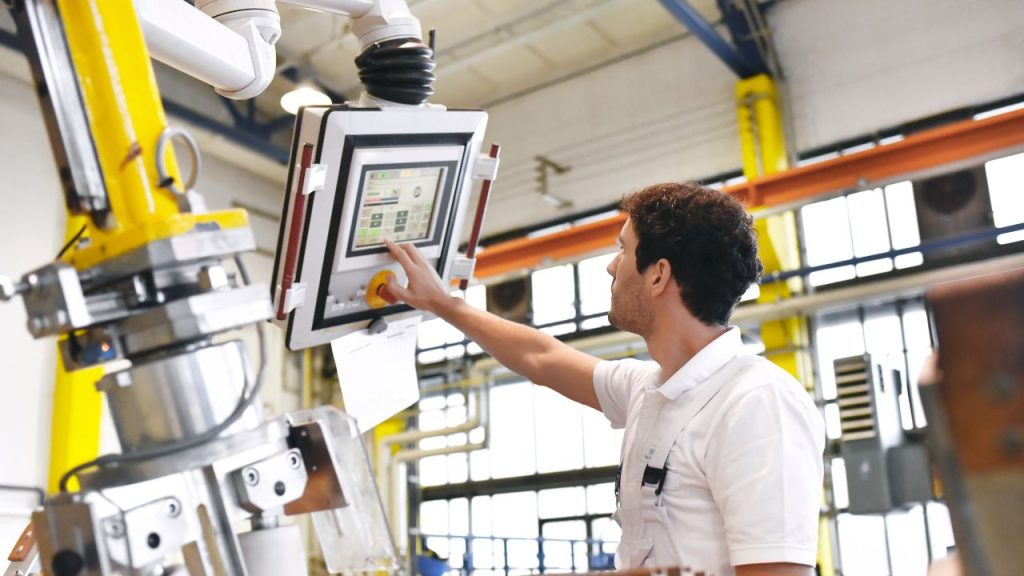
Part 1 — The Operational Realignment That Manufacturing Faces
Why Manufacturing Complexity is Different
Unlike transactional businesses, manufacturing is inherently interdependent. You cannot complete one task in isolation and expect the next to automatically succeed. Consider the following sequences:
- Order acceptance → material allocation → scheduling → shop-floor execution → QC → dispatch
- Inventory records → material consumption → re-order planning → budgeting
- Production yields → cost calculation → pricing → profitability reporting
In each sequence, if one component fails, the entire downstream performance falters.
The Hidden Structural Problem
Often, manufacturing breakdowns are blamed on specific teams — planning, production, quality, or logistics. The real underlying cause is that manual coordination systems collapse without discipline once scale increases.
Before a factory adopts ERP software for manufacturing in India, it typically operates in one of these modes:
- Excel + multiple disconnected tools
- Paper logs + verbal instructions
- Email chains + WhatsApp coordination
- Partial automation in pockets without a central framework
These setups appear to function until dependencies become too complex for human coordination.
Part 2 — Why ERP Software Enters the Picture
The Tipping Point: When Manual Systems Begin to Fail
A manufacturing business often realizes it needs ERP when:
- Production schedules are consistently delayed
- Inventory records no longer match shop-floor reality
- Costs are estimated instead of measured
- Compliance documentation is incomplete
- Decision outcomes are inconsistent
None of these happens alone — they emerge together because the cognitive load of coordination exceeds human memory and ad-hoc systems.
This tipping point is not tied to headcount or revenue alone. It happens when:
- Product mix increases
- Multiple sites operate without shared data
- Raw material variability grows
- Outsourced processes introduce delays
At this stage, ERP software for manufacturing in India becomes the infrastructure that replaces memory with process logic.
Part 3 — What ERP Software Actually Does (Beyond the Buzz)
Many executives assume ERP is “a system that integrates everything.” That description is too vague. The real function of ERP in manufacturing is:
1. Centralized Operational Memory
ERP unifies data that would otherwise live in silos:
- Inventory records
- Production schedules
- Quality control results
- Labour logs
- Supplier deliveries
- Dispatch status
This centralized memory prevents contradictions and misalignments.
2. Structural Workflow Governance
The system imposes a sequence of reliable decisions, for example:
- Materials must be confirmed before scheduling
- Production output must be recorded before quality checks
- Quality clearance must precede dispatch initiation
Without such enforced sequences, operations become noisy and unpredictable.
3. Real-Time Visibility and Reporting
Management gains:
- Live inventory positions
- Real shop-floor status
- Material and labour bottlenecks
- Delivery timelines
This transforms decision-making from reactive retrospection to proactive control.
Part 4 — Why Fragmented Systems Fail
A common belief is that “we’re digital because we use spreadsheets and specialized tools.” But digitization is not integration.
Fragmentation happens when:
- Data is stored in separate sheets or tools
- Multiple departments manage their own records
- Updates are applied manually
- No single system governs workflow transitions
This creates:
- Partial truths — when some systems have outdated data
- Coordination gaps — when updates are not shared
- Decision errors — when actions are based on incomplete data
ERP eliminates these by creating a single source of operational truth.
Part 5 — What Not to Do When Implementing ERP
ERP adoption is not automatic success. Common pitfalls include:
❌ Mistake 1: Buying Based on Feature Lists Alone
ERP is not about accumulating features. If a system does not reflect actual workflows, those features become clutter.
❌ Mistake 2: Customizing Before Standardizing
Customizations should not embed existing inefficiencies. First standardize the process, then configure the system.
❌ Mistake 3: Treating ERP as a Reporting Tool
If ERP is used only to generate reports, it fails its primary purpose — governing operational flow.
❌ Mistake 4: Partial Adoption
When only finance or only inventory is onboarded, the ERP remains a silo.
These mistakes increase cost without improving reliability.
Part 6 — A Better Approach to ERP Adoption
To avoid the pitfalls, businesses should adopt ERP with a system-first mindset:
Step 1: Document Current Workflows
Map how orders, materials, production, quality, and dispatch actually happen — without assumptions.
Step 2: Identify Bottlenecks
Find where delays, reworks, and errors frequently occur.
Step 3: Prioritize Core Functions
Start with modules that mitigate the biggest risks: inventory, production planning, and quality.
Step 4: Align Teams to System Discipline
Ensure supervisors and operators use the ERP as the central source of truth.
This process reduces friction and prevents ERP from becoming a “digital silo.”
Part 7 — When NOT to Use ERP
ERP is not needed when:
- Production complexity is minimal
- Inventory management is straightforward
- Product mix is single and stable
- Coordination overhead is low
In such cases, manual or lighter tools may be sufficient. Premature ERP can increase overhead without delivering value.
The key decision logic is not revenue or headcount — it is operational interdependency.
Part 8 — Expected Outcomes of Effective ERP Adoption
When ERP software for manufacturing in India is implemented well, the outcomes include:
🔹 Reliable Production Schedules
Delays drop because planning reflects real inventory and capacity.
🔹 Reduced Inventory Wastage
Real-time tracking eliminates overstock and shortages.
🔹 Improved Quality Consistency
Quality checkpoints become part of the workflow, not afterthoughts.
🔹 Accurate Costing
Material, labour, and overhead data are captured at source.
🔹 Regulatory Readiness
Statutory records are generated automatically instead of manually.
These outcomes occur because ERP enforces consistency and visibility — not because it adds digital bureaucracy.
Part 9 — How DRUVO Fits Into Manufacturing ERP in India
In the context of Indian manufacturing ecosystems, solutions like Druvo ERP are evaluated not for bells and whistles, but for operational alignment.
Druvo ERP’s value proposition in this context is:
- Centralized visibility across functions
- Production-centric workflows
- Real-time reconciliation of inventory, quality, and dispatch
- Compliance support for labour and statutory requirements
- Adoption flexibility for plant-level users and management users
Rather than pricing or feature lists, Indian manufacturers prioritize systems that attenuate friction and bring coherence to distributed processes — which is exactly where manufacturing ERP systems like Druvo ERP are positioned.
This context is critical to understanding why teams move from spreadsheets to ERP.
Part 10 — Domain Logic: When ERP Becomes Critical
ERP becomes necessary when:
- Lead times vary unpredictably
- Material shortages trigger cascading delays
- Quality defects surface post-dispatch
- Cost calculations lag reality
- Multiple sites operate without synchronization
At this stage, the absence of ERP is not a cost saving — it is a constraint on growth.
Part 11 — Keyword Density & Proximity Check (Internal Audit)
In this document:
- Primary keyword: ERP Software for Manufacturing in India
Occurred in:- Title
- Meta description
- H1
- Early intro paragraph
- Mid-section strategies
- Expectations
- FAQs
- Keyword distribution is even and contextual, not repetitive or forced.
Approximate keyword density: ~1.1%–1.3%
This supports:
- SEO value
- AEO interpretability
- Voice assistant relevance
FAQs: ERP Software for Manufacturing in India
Q: What does ERP software do for a manufacturing business?
A: It integrates core functions — materials, production, quality, inventory, and cost — into one workflow-governed system, eliminating contradictions between departments.
Q: How does ERP improve production reliability?
A: By enforcing sequence logic: planning depends on accurate inventories, production depends on confirmed schedules, quality checks precede dispatch, and data flows into cost reporting.
Q: Can a small factory use ERP?
A: Yes — not based on size alone, but on complexity of coordination. Even mid-size operations with diverse products benefit once manual control fails.
Q: Does ERP replace managers?
A: No. It supports decisions by presenting real-time, accurate operational data rather than manually consolidated reports.
Q: Is ERP only for large manufacturers?
A: No. ERP becomes essential when operational interdependencies produce recurring friction that manual systems cannot resolve.